SBE 47 Online Presentation: Streamline Your Remotes

With the rapid global growth of podcasting and radio on-demand, the need has never been higher for professional, easy-to-use solutions that handle technical problems intuitively, without sacrificing feature set.

RØDE Microphones, and Australian-based manufacturer of professional microphones and audio equipment, released the RØDECaster Pro, the world’s first fully integrated podcast production studio, in December 2018, initially for the podcast production audience. Since that time RØDE has listened to the broadcast community, and has developed dozens of additional features that make the Rodecaster Pro perfect for remote broadcasting in almost any situation, both private and professional. Ryan Burke and Tristan Salter from RØDE Microphones HQ, will present the Rodecaster Pro, along with a range of other RØDE solutions on offer, followed by a discussion on the continuing evolution of remote production gear at RØDE.

Join SBE Los Angeles Chapter 47 Tuesday, September 8, 2020 at 6:30 PM PDT. Sign up here.
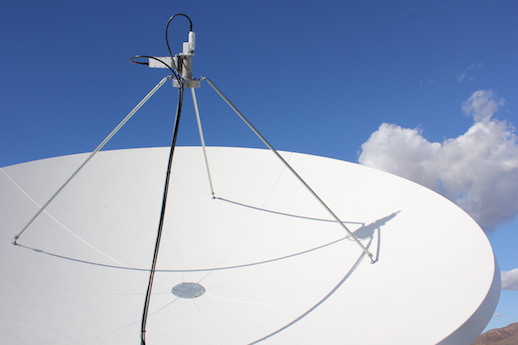
Got Dishes? Take a Lump!

The FCC is clearing for auction some of the C-Band spectrum that broadcasters have used over the past decades. It seems they are in a bit of a hurry, so they’ve put into place some pretty good incentives to get out of the way of 5G telecom companies ready to bid.

KSDY-LD San Diego C-band dish, photo by Gary S.

If your company owns and has registered satellite dishes, the FCC has put together a catalog of reimbursable expenses you may incur to rearrange your C-band receiving habits. For example, if your programming syndicator is continuing its broadcasts without any interruption or change of frequency, you may only need a new inline receive filter. If you are part of a network that will need tighter compression, you might need a whole new receiver, along with that filter, plus the labor to install it. All the costs associated with those changes can be claimed, and your network provider, satellite owner, or your own corporate engineering crew can help with getting your organization reimbursed.

One interesting wrinkle is that in the interest of expeditiousness, the FCC is offering another route, and this is not to be ignored. They will pay a lump sum of $9,000 for a usable port to get you off the band. I installed a four-feed multibeam modification a few years ago for a client and now they are eligible for $42,000 as a lump sum, even if they only need to buy four passband filters for a total of about $2,500, including installation. That means they can pocket $39,500 without guilt or fear of prosecution. Pretty good, no?

What’s the catch? Well, the deadline for filing was pretty tight–August 31–but the FCC has extended that for two more weeks to September 14. If you are using an Intelsat satellite, you have probably already been contacted about this. Others, like NPR, Premiere Networks, or your TV network, has likely been in touch with you. If you are independent, contact your station attorney or vendors like Dawnco or SEG Wesco to see how to get your money.

Cyber Hackers Strike Salem Group

Salem Media, owners of KCBQ 1170 AM San Diego and K241CT Oceanside, apparently got hit by hackers with damaging ransomware. Salem announced it has been able to recover “many of its critical Operational data and business systems,” and that the company does not expect the incident to have a material impact on its business, operations or financial condition. No word on the impact on their San Diego operations.

Attacks in the last year caused damage to the Bicoastal Media, Urban One and Entercom groups.

FCC Allows AM/FM Simulcasts

The FCC last week issued a Report and Order eliminating prior rules (section 73.3556) that kept co-owned stations from broadcasting the same programming on both their AM and FM stations simultaneously. It was a rule intended in 1964 to begin pushing broadcasters to have more “voices” in a given community.

FCC Logo

However, the competitive climate of broadcasting has changed. There are infinitely more voices in a a given community due to the introduction of cable, satellite, HD subchannels, and now internet broadcasting. AM broadcasting struggles now with NRSC bandwidth limits, lack of stereo, electrical noise, and all that competition from better sounding sources.

The FCC R & O said that simulcasting will facilitate AM stations transition to digital broadcasting by allowing them to simulcast on FM or other AM stations until they can stand on their own feet as AM digital radios become more common. AM digital, when well implemented, can fill in gaps in rough terrain and cover longer distances.

The rule also allows duplication of FM programming even when coverage contours overlap. For example, a major ownership group could create a network of stations in adjacent markets that all have the same programming 24 hours per day much like EMF’s “K-Love” and “Air1” formats.

The change takes effect immediately.

Online Chapter 36 Presentation: STACO Updates the UPS

I picked up a new UPS (Uninterruptible Power Supply) the other day that had been shipped to me and to my surprise, it was quite lightweight. Turns out the premium manufacturers are now installing LiIon batteries and it might just save your back! What about Lithium Ion batteries? Are they safe to install in your facility? Do they hold a charge as well? How long do they last versus the traditional gel lead-acid cells? Can you simply swap the new batteries in place of your old gel cells?

Join Chapters 9 Phoenix, 47 Los Angeles, and 36 San Diego on August 26 at 12 noon PT for a presentation from Chuck Berry of STACO Engineering on the modern UPS.  Brought to you by STACO rep Doug Tharp of SCMS.

Society of Broadcast Engineers