All posts by Gary Stigall

November 19 Online Meeting: Chris Crump from Comrex

We’ll explore all things Comrex, including a discussion about their new product, FieldLink and the issue broadcasters face with frequencies related to wireless mic/IFB. Chris Crump will be presenting with context and a history lesson.

Many of us might not quite remember the early days of Comrex. The first products produced by its founder, John Chaney, in Sudbury, Massachusetts were some of the television industry’s first wireless mic and IFB devices. They were used on Broadway, by the NFL, and by television stations all over the United States. A lot has changed since then, including the problems with frequency congestion that caused a shift in product line focus in the late 60s. We’ll discuss the issues that broadcasters, especially at sporting and live concert events, face when trying to do sideline or in-the-stands reporting in addition to covering some new solutions being offered by Comrex and other vendors.

About Chris

Chris Crump has served as the Sr. Director of Sales & Marketing for Comrex since 2004. In 1987, he began his professional radio career at ABC/Cap Cities Detroit before taking the Features Editor position at MediaBase Research/Monday Morning Replay. On-air, remote broadcast engineer, Creative Services Director roles followed for Capitol Broadcasting  in Orlando and the Ron & Ron Radio Network in Tampa/St. Petersburg.  In 1996, Crump moved to the manufacturing side of the broadcast business performing sales & marketing roles for Spectral, Inc., Euphonix, Symetrix and Klotz Digital America. He is a CBNE certified member of the SBE chapter in Atlanta. 

Join us Wednesday, November 19 at 11:00 PT on Zoom. This meeting was organized by Chapter 9, Phoenix. 
ZOOM LINK HERE

October Online Meeting Explores AI and Cloud Technology for Radio Broadcasters

Artificial Intelligence and cloud technology are rapidly evolving as we progress through 2025. As an industry, both are vital topics to keep up to date on and ultimately adapt to. Andrew Scaglione explains what’s already possible to achieve in broadcasting using AI and the cloud, including global case studies.

Andrew Scaglione is in his fourth year as Radio.Cloud’s account director, responsible for global business development with a focus on the US market. Andrew has been in the industry for a decade-plus and is based in Cleveland, Ohio. Prior to Radio.Cloud, Andrew worked for G Networks/Sun Broadcast Group/Envision Networks in Cleveland, and was a TV and radio sports reporter/anchor in Fayetteville, Arkansas.

Join us Tuesday, October 14, at 11:30 AM via Zoom. This meeting organized by Chapter 47, Los Angeles. 

REGISTER HERE

KFI Tour Brings Back Veteran Engineers

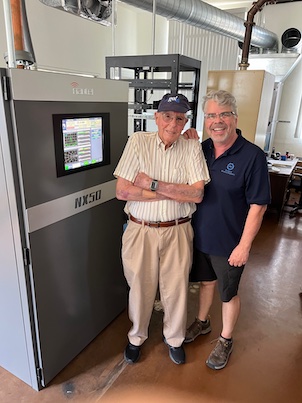
Marvin Collins with Doug Irwin at the KFI (AM) transmitter in La Mirada, CA

A late August tour of the La Mirada transmitter site tour sponsored by SBE Chapter 47 brought together an impressive collection of veteran chief engineers, including Marvin Collins, now 90, who was Chief Engineer of KFI (AM) 640 between 1976 and 2000, along with current CE Doug Irwin.

The iHeartMedia crew maintains impressive redundancy, including three capable transmitters, two independent antennas, electric generator, and standby studio. 

KPBS Tour a Success

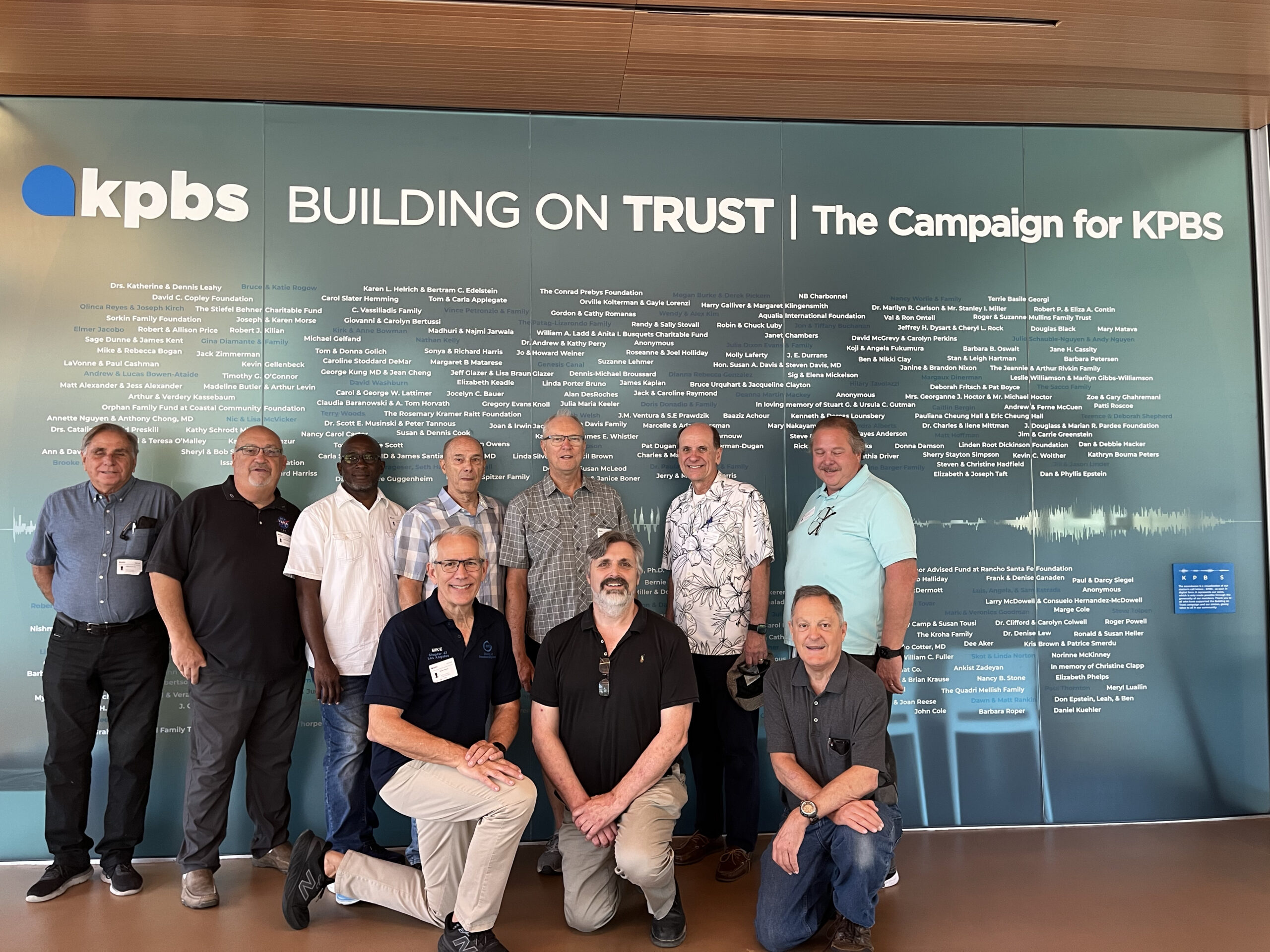
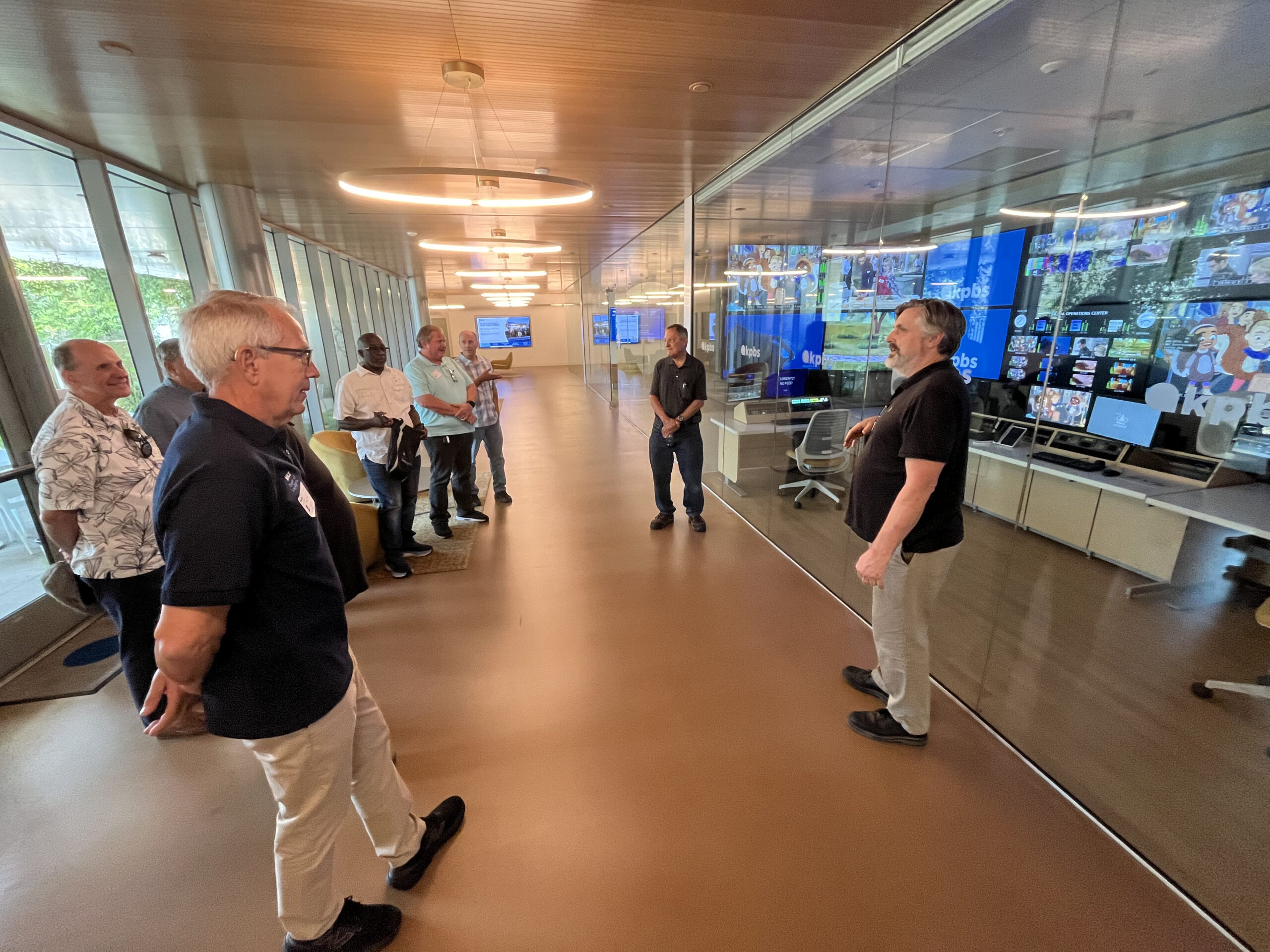
On August 13, 2025, SBE Chapter 36 toured the recently remodeled KPBS FM and TV studios on the SDSU campus. We were pleasantly surprised to see so many veteran KPBS staff engineers join us.

Many thanks to Tony McDaid and Tom Guidry for showing us around.

Engineers gathered at the KPBS lobby, front row L to R, is Mike Tosch (past KPBS), Tony McDaid (current KPBS), and Tom Guidry (current KPBS). Back row, L to R, is Mike Curran, Chris Durso (past KPBS), Darnell Forde, Bill Lipis, Gary Stigall, Donn Johnson (past KPBS), and Dean Imhof. At least 400 years of broadcast experience pictured.
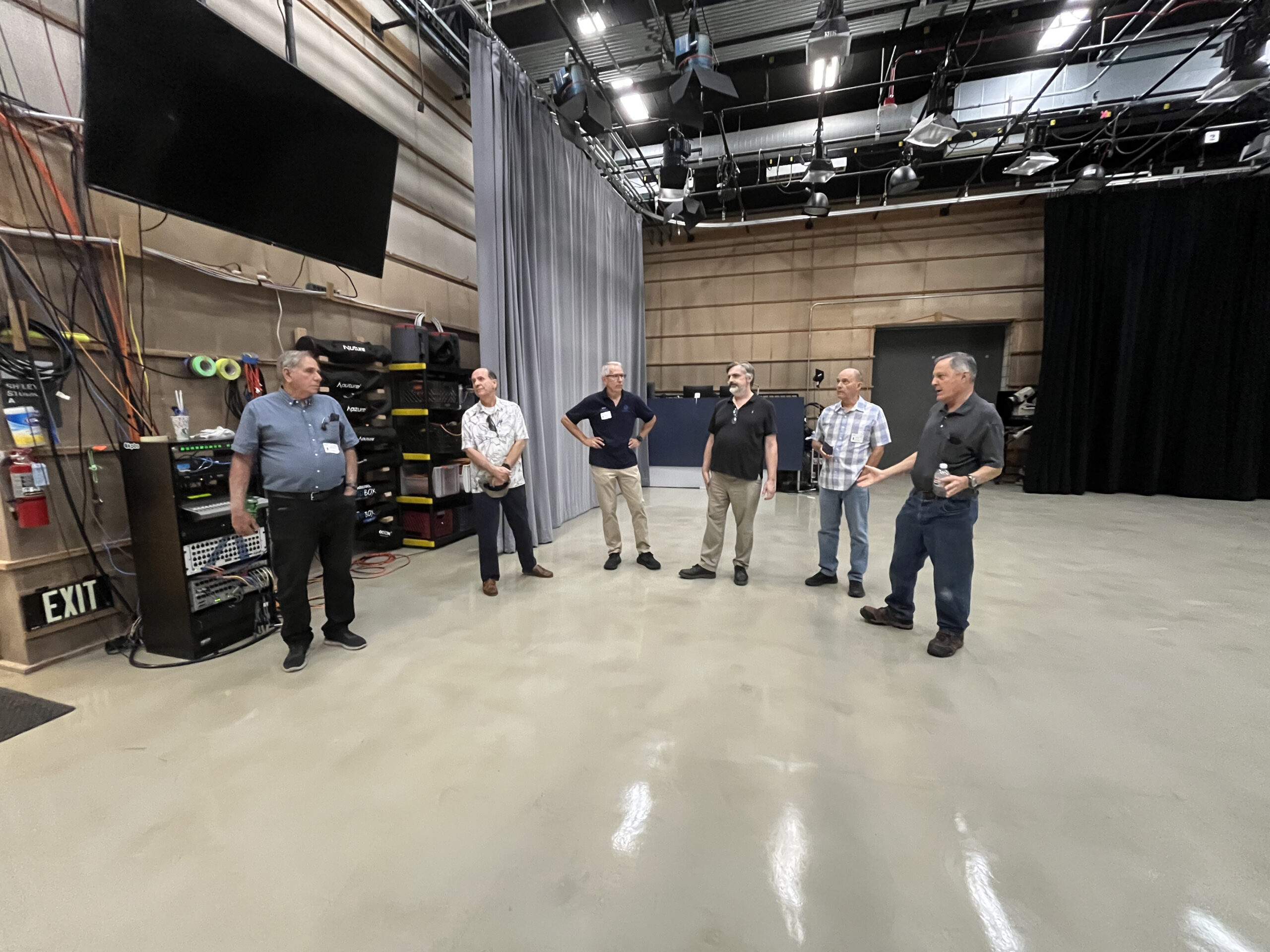
KPBS engineers show off one of two large TV studios.
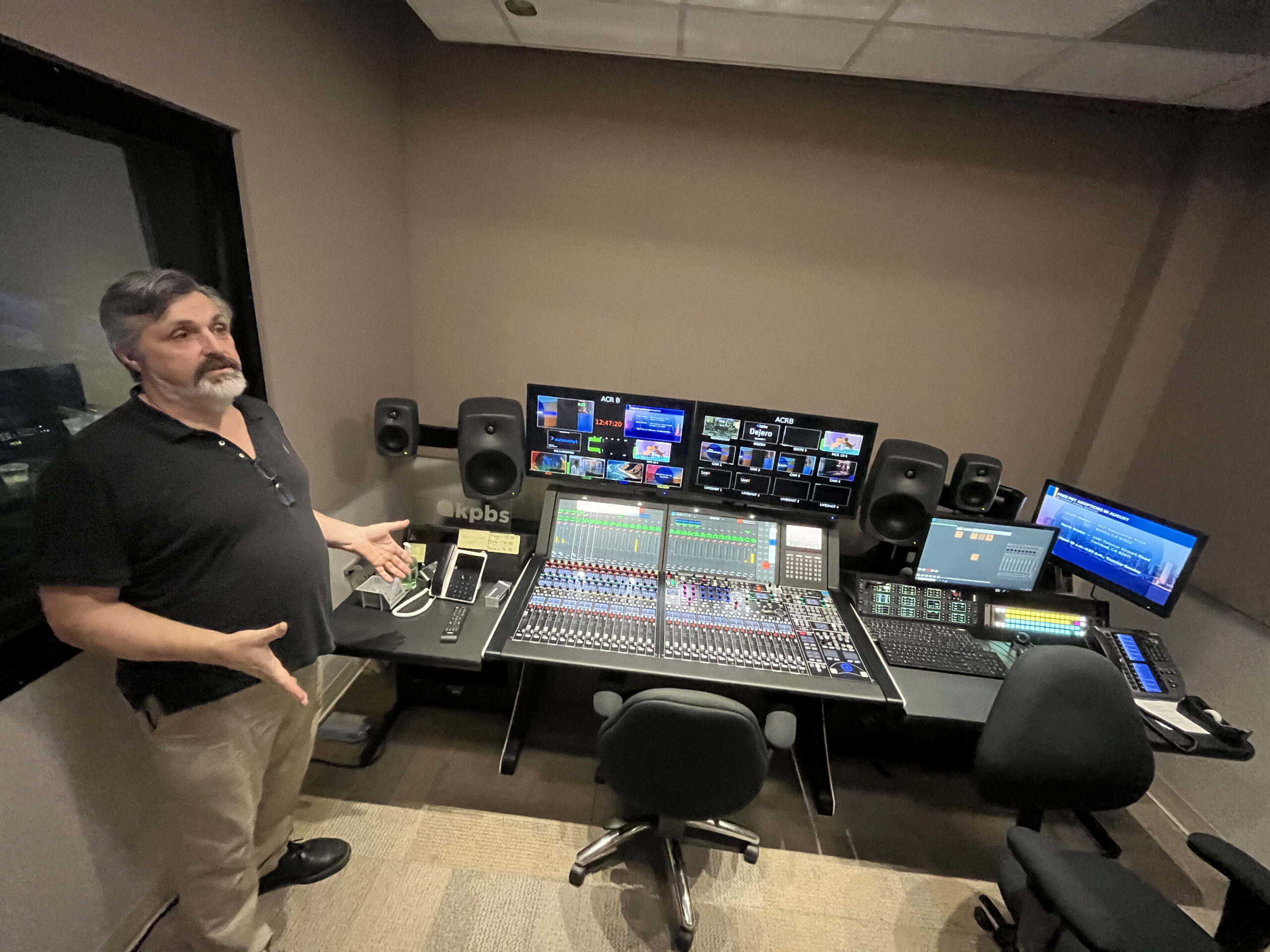
Tony McDaid of KPBS shows the Lawo TV production audio board.
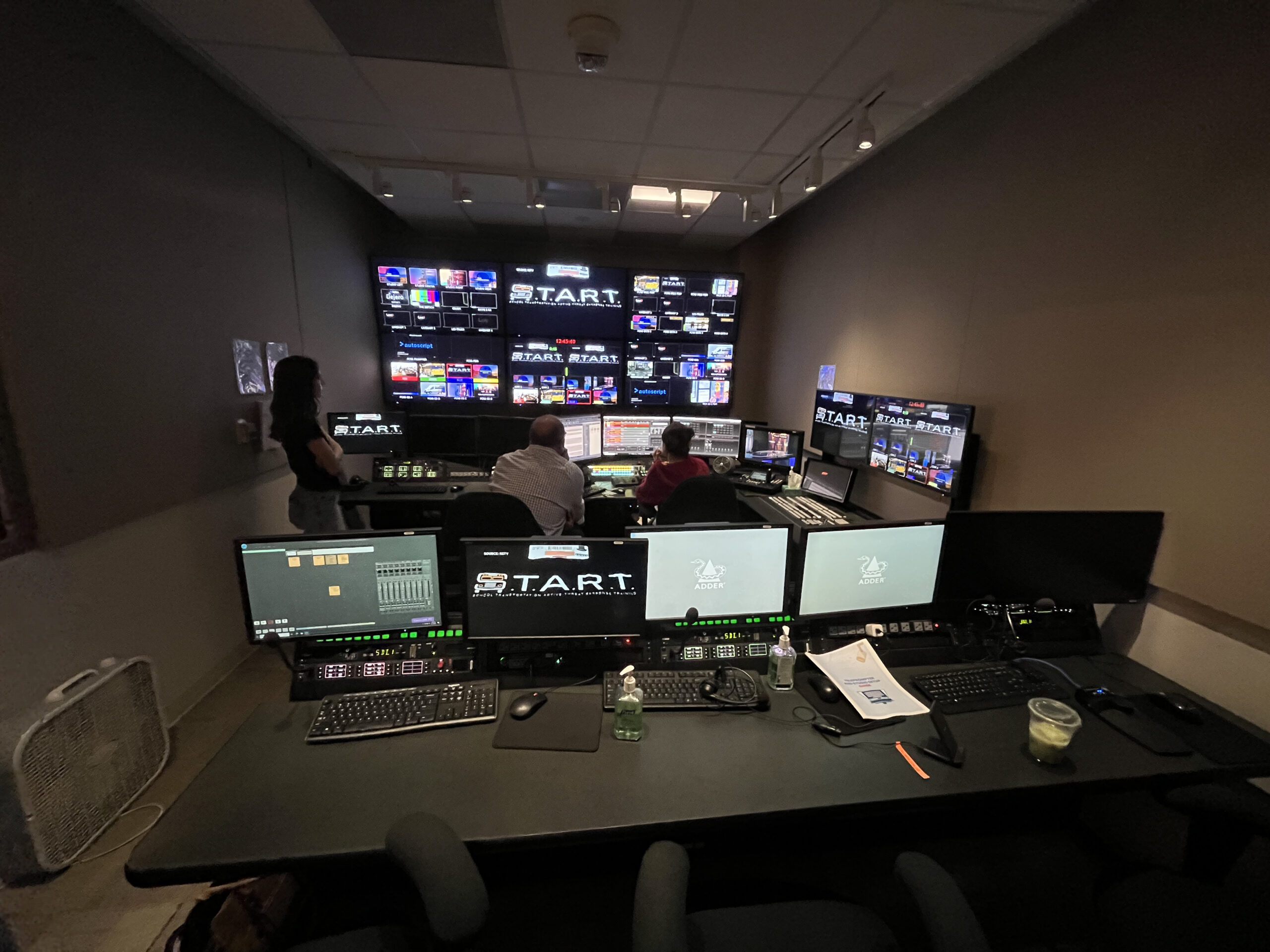
KPBS TV Production Room
Tony McDaid shows us the TV Master Control Room, fishbowl style.

FCC Allows Zonecasting

FCC rules just went into effect allowing FM stations to originate programming on boosters, effectively giving them the right to target ads to certain segments of their coverage area. The rule was approved in November 2024 but adopted in late July. 

In San Diego, Audacy’s KWFN 97.3 has a system with a main transmitter in Southeast San Diego and four independent boosters, each with HD capability. They could sell ads unique to booster coverage areas in La Jolla, Carlsbad, San Marcos, or Romona. The new rules allow up to three minutes per hour of independent broadcasting.

One limiting factor is with mobile receivers. When moving between coverage zones, a listener in an automobile would hear an ad being interrupted by a different ad. And with terrain shielding, as is likely in North County, these switches could occur frequently as one signal dominates another with movement. KWFN would have to file with the FCC to allow this operation. 

GeoBroadcast Solutions introduced the geotargeting concept, proposed the new rules, and developed the concept with several broadcasters, including KWFN. I was involved in helping to set up the boosters in 2021.  Precise timing with GPS helps to make synchronized boosters viable. Terrain helps isolate the booster from the main signal, but hills in the booster coverage area can make mobile reception tricky. Also, using boosters in a metro area like San Diego can be hindered by adjacent channel reception, especially when trying to maintain a digital HD sideband signal.